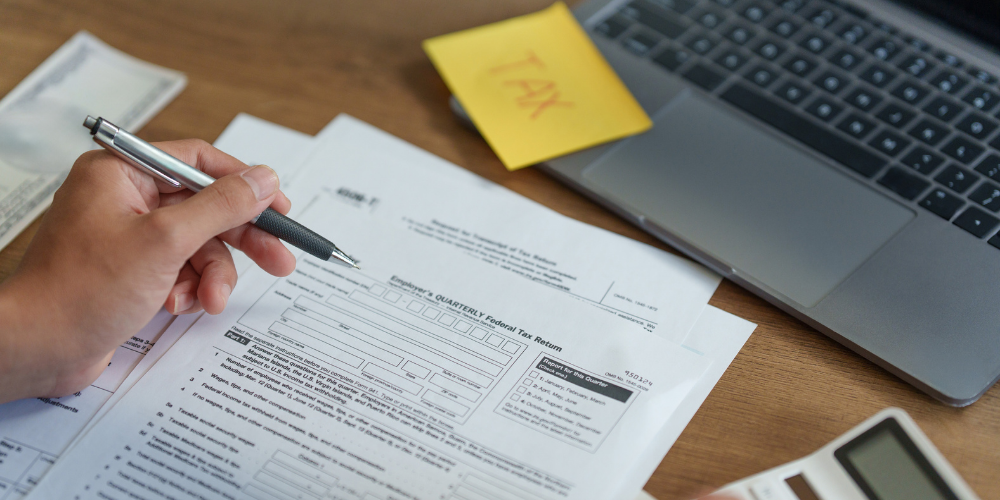

An IRS CP14 notice means the IRS believes you have an unpaid federal tax balance. It is generally the first balance due notice the IRS sends after a tax has been assessed, and it tells you how much the agency says you owe, including applicable penalties and interest.
A CP14 should not be ignored, but receiving one does not mean the IRS is about to seize your bank account or garnish your wages. At this stage, the priority is simpler: confirm that the amount is correct and decide how you are going to address it.
What Is an IRS CP14 Notice?
The IRS sends Notice CP14 when its records show unpaid taxes. The notice identifies the tax period involved, the amount owed, the payment due date, and instructions for paying or contacting the IRS.
The Taxpayer Advocate Service describes the CP14 as the IRS’s first and most common balance due notice. It generally requests payment within 21 days.
A CP14 can include:
- Unpaid federal income tax
- Failure-to-pay penalties
- Interest that has accumulated on the unpaid balance
- Instructions for making a payment
- Information about setting up a payment plan
- A phone number to call if you believe the notice is incorrect
Do not assume the notice is correct simply because it came from the IRS. Compare it with your filed return, payment records, IRS account transcript, and any previous correspondence.
What Should You Do After Receiving a CP14?
Start by reading the entire notice and confirming three things:
- The tax year or period is correct.
- The original tax balance matches your records.
- Payments or credits you already made have been applied correctly.
Taxpayers sometimes receive balance due notices even though they already submitted payment. The Taxpayer Advocate Service specifically advises taxpayers in this situation to verify their records because payment-processing delays can cause an account to temporarily show a balance that has already been paid.
If you already paid, gather proof such as a bank statement, canceled check, IRS Direct Pay confirmation, or Electronic Federal Tax Payment System confirmation. Follow the instructions on the CP14 for disputing the balance rather than paying the same tax twice.
What If the CP14 Is Correct?
If you agree that you owe the money, the best option financially is generally to pay the balance in full by the date shown on the notice.
That stops additional interest and late-payment penalties from accumulating.
As of the third quarter of 2026, the IRS underpayment interest rate is 7% per year, compounded daily. The IRS has also announced that the rate will remain 7% for the fourth quarter of 2026.
The standard failure-to-pay penalty is generally 0.5% of the unpaid tax for each month or part of a month, up to a maximum of 25%.
That means waiting to address the balance can make the problem more expensive even when no additional collection action occurs.
What If You Cannot Pay the Full Amount?
Not being able to pay the CP14 in full does not mean you should ignore it. The IRS offers several resolution options.
| Option | General IRS Rules |
| Short-term payment plan | Individuals owing less than $100,000 in combined tax, penalties, and interest may qualify to pay within 180 days |
| Long-term payment plan | Individuals may generally apply online when they owe $50,000 or less and have filed all required returns |
| Currently Not Collectible status | May temporarily suspend most collection activity when payment would create financial hardship |
| Offer in Compromise | May allow qualifying taxpayers to settle for less than the full balance based on ability to pay, income, expenses, and assets |
Interest generally continues while you are making installment payments. For individuals who filed their return on time and have an approved installment agreement, however, the failure-to-pay penalty can drop from 0.5% to 0.25% per month while the agreement is in effect.
Choosing the right resolution option matters. An installment agreement may be perfectly reasonable for one taxpayer while another may qualify for hardship treatment or an Offer in Compromise.
Can CP14 Penalties Be Removed?
Sometimes.
The IRS historically offered First Time Abate relief for taxpayers with a strong compliance history. Beginning in summer 2026, the IRS started transitioning to a new program called Automatic Exemption from Penalty, or AEP.
AEP applies to certain eligible original returns beginning with tax year 2025 and future periods. Taxpayers who qualify based on their prior filing and payment history generally do not have to separately request this administrative penalty relief. Not every return or penalty qualifies.
Reasonable-cause penalty relief may also be available in certain circumstances. The facts matter, so taxpayers should not assume that every penalty can be removed.
What Happens If You Ignore a CP14?
Ignoring the notice does not make the balance disappear.
If the debt remains unresolved, the IRS can continue its collection process through additional notices and potentially a federal tax lien or levy procedures. The Taxpayer Advocate Service states that if the CP14 balance remains unpaid, the IRS may move forward with collection activity.
That does not mean a CP14 itself is a levy notice. It means the CP14 is the point where dealing with the problem early can prevent a relatively manageable balance due from progressing into a more serious collection matter.
Get Help With an IRS CP14 Notice
If you received a CP14 and are unsure whether the balance is correct, cannot afford to pay it in full, or already have other unresolved IRS problems, Yarborough & Potter can help you determine what the notice means and what resolution options actually fit your situation.
Y&P’s [tax debt resolution services] tax debt resolution services are backed by professionals with former IRS experience, including experience inside IRS collection and examination functions.
Contact Yarborough & Potter at (704) 759-3900 to schedule a free consultation and get a clear assessment of what to do next.